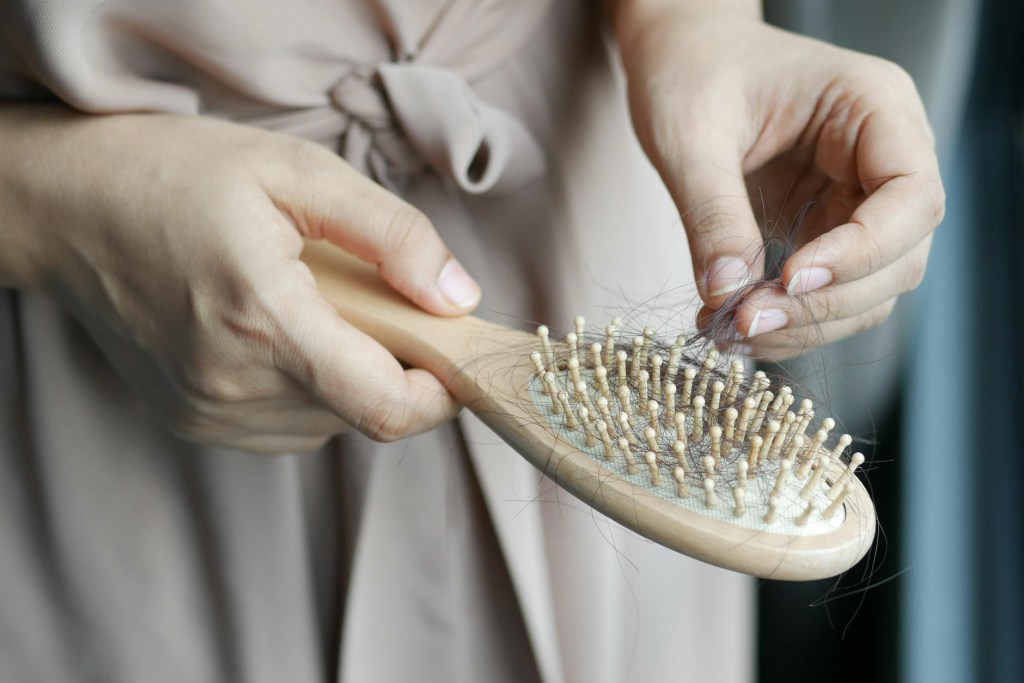
Telogen effluvium (TE) is one of the most common causes of sudden, diffuse hair shedding, particularly in women. It is usually non-scarring and often reversible. Rather than being a primary disease of the hair follicle, it represents a reaction to a systemic or physiological stressor that temporarily disrupts the normal hair growth cycle.
TE occurs when a larger than normal proportion of hair follicles prematurely shift from the growing phase (anagen) into the resting phase (telogen). This leads to increased daily shedding, often in the range of 150 to 400+ hairs per day. The loss is typically diffuse across the scalp rather than localised, and people often notice reduced ponytail thickness rather than bald patches.
Clinical Types
Acute telogen effluvium usually begins around 2 to 4 months after a triggering event. It is the most common form and typically resolves within 3 to 6 months once the underlying cause is addressed. Hair regrowth generally follows within 6 to 12 months.
Chronic telogen effluvium persists for longer than 6 months and may fluctuate over time. In some cases, the underlying trigger is unclear. This form can last for years, although it still follows a non scarring and potentially reversible pattern.
Causes and Triggers
Telogen effluvium is most often triggered by a significant systemic stressor. Common physiological triggers include pregnancy and postpartum hormonal changes, menopause, severe illness, surgery, trauma, hemorrhage, and sudden weight loss. Infections are also important, including high fevers and COVID 19, which has been strongly associated with post infectious shedding.
Nutritional and metabolic factors play a major role. Deficiencies in iron, ferritin, vitamin D, vitamin B12, zinc, and protein can all contribute, particularly when combined with malnutrition, malabsorption, or rapid weight loss. Thyroid dysfunction is another well recognised cause affecting hair cycling.
Medications can also trigger TE, including anticoagulants, anticonvulsants, retinoids, some antidepressants, and high dose hormonal contraceptives. Emotional stress is frequently reported, particularly significant life events, although everyday stress alone is less strongly supported as a direct cause. In a notable proportion of cases, no clear trigger is identified.
Pathophysiology and Hair Cycle Disruption
The central mechanism in telogen effluvium is a premature shift of follicles into the telogen phase. This is thought to occur in response to systemic stress that disrupts normal follicular activity. When multiple follicles enter telogen at the same time, shedding becomes noticeable several months later, reflecting the natural timing of the hair cycle.
Across different triggers, the shared pathway is systemic stress whether physiological, nutritional, metabolic, or hormonal. This temporarily alters the normal balance of the hair cycle, leading to synchronised shedding of hairs that had previously been in the growth phase.
Rapid Weight Loss as a Trigger
Rapid weight loss is a well established cause of telogen effluvium and can occur with crash diets, bariatric surgery, or certain weight loss medications. The primary mechanism is metabolic stress rather than weight loss itself.
Severe calorie restriction reduces energy availability for the hair follicle, which has a high rate of cellular turnover. In this state, follicles may be pushed prematurely into the telogen phase. Protein energy deficiency further compounds this effect, particularly when weight loss is rapid or unplanned.
Micronutrient deficiencies are also common in this context, including iron, zinc, vitamin B12, and folate. These deficiencies often develop alongside rapid weight reduction or malabsorptive states. Shedding typically appears 2 to 6 months after the period of weight loss and reflects the delayed nature of the hair cycle response.
people using GLP 1 medications for weight loss are increasingly presenting with this type of hair shedding, alongside women in the postpartum period. In both situations, the combination of rapid physiological change, altered intake, and systemic stress appears to contribute to the development of telogen effluvium.
Diagnosis
Diagnosis of telogen effluvium is primarily clinical. A key feature is a history of a triggering event occurring approximately 2 to 4 months before the onset of diffuse shedding. The absence of scarring and the generalised pattern of loss are important distinguishing features.
Supportive tests may include hair pull or wash tests and trichoscopy. In some cases, trichogram or scalp biopsy may be used to differentiate TE from other causes of hair loss such as female pattern hair loss. Blood tests are often performed to identify underlying contributors, including full blood count, ferritin, iron studies, thyroid function, and selected vitamin levels.
Management and Prognosis
Management focuses on identifying and correcting the underlying trigger. This may involve treating illness, addressing nutritional deficiencies, adjusting medications, or stabilising weight and metabolic status. In many acute cases, no specific pharmacological treatment is required.
Reassurance is an important part of care, as telogen effluvium is non scarring and does not cause permanent follicular damage. Once the triggering factor is removed or resolved, hair typically begins to regrow over time.
In persistent or distressing cases, supportive options such as topical or oral minoxidil, nutritional supplementation, and cosmetic approaches may be considered, although evidence varies. Emotional impact should also be acknowledged, as visible shedding can significantly affect quality of life despite the condition being medically benign.
Take Home Message
Telogen effluvium is a common, usually reversible cause of diffuse hair shedding triggered by systemic stressors such as illness, hormonal change, nutritional deficiency, medication, or rapid weight loss. It occurs due to a temporary disruption of the hair cycle, leading to synchronised shedding months after the trigger.
Diagnosis is mainly clinical, supported by targeted investigations to identify underlying causes. Most cases resolve once the trigger is addressed, with gradual regrowth over several months. The key principles of management are identification of reversible factors, correction of underlying causes, and reassurance regarding the self limiting nature of the condition.
Disclaimer
This article is for educational and informational purposes only and is not a substitute for professional medical advice, diagnosis, or treatment. If you are experiencing hair loss or scalp changes, you should seek assessment from a qualified healthcare professional to determine the underlying cause and appropriate management.
 The bodybuilding aesthetician
Leave a comment