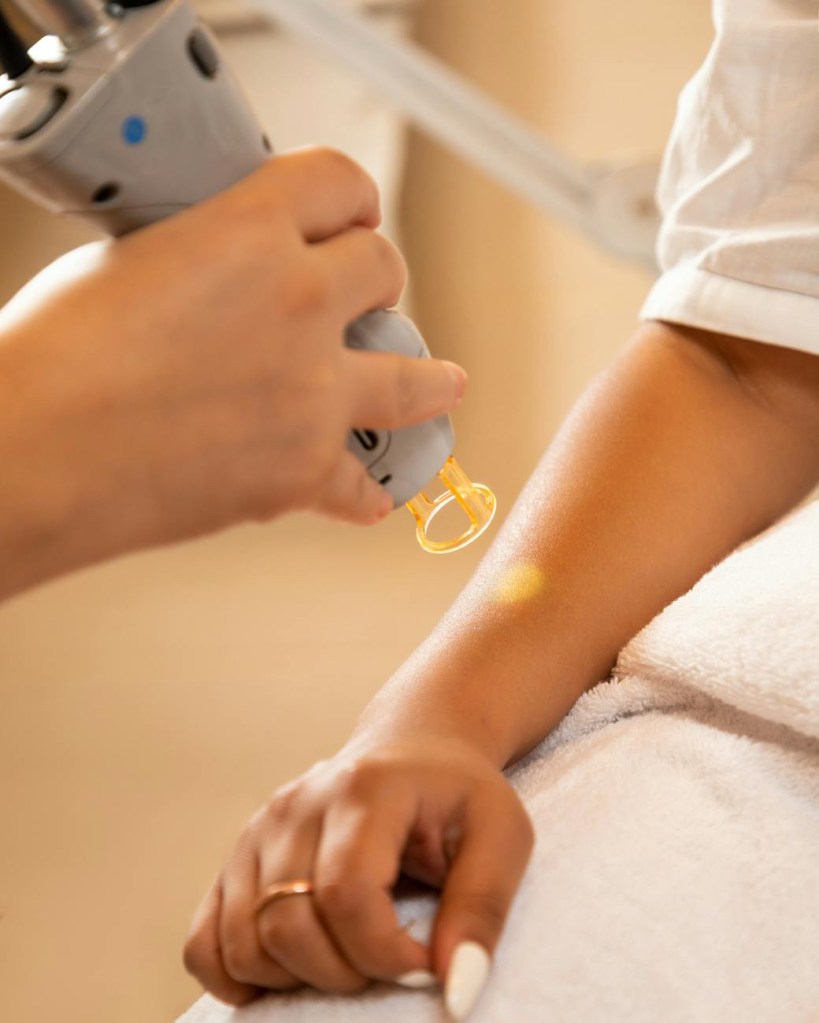
Fluence, defined as the energy delivered per unit area (J/cm²), is one of the most critical parameters in laser hair removal. The correct fluence setting directly influences treatment efficacy, patient comfort, and the risk of side effects. Selecting appropriate fluence requires careful consideration of several factors, including skin phototype, hair colour and thickness, and the wavelength and capabilities of the specific laser device. When properly adjusted, fluence can maximize hair reduction while minimizing adverse reactions such as burns, pigment changes, or excessive discomfort.
Fluence Ranges and Their Impact on Treatment Outcomes
Evidence demonstrates that fluence influences both the level of follicular damage and the degree of clinical hair reduction achieved. For long-pulse Nd:YAG lasers (1064 nm), studies report that fluences of 50, 80, and 100 J/cm² produce similar hair reduction outcomes, approximately 27–29% at three months, while maintaining low rates of side effects. This suggests a plateau effect, where increasing fluence beyond a certain threshold does not necessarily improve results but may increase discomfort. For darker skin types, significantly lower fluences (4.5–10 J/cm²) are recommended to reduce the risk of burns. For lighter skin, higher fluence values up to 15 J/cm² may be used safely due to lower competing epidermal melanin absorption.
Alexandrite lasers (755 nm), typically used for lighter skin types, achieve effective hair reduction with fluences ranging between 20–50 J/cm². Higher fluences of 35–50 J/cm² correlate with improved efficacy, especially on Fitzpatrick I–III skin. For darker skin types, lower-fluence, multipass, high-frequency techniques have demonstrated strong results while reducing thermal risk to the epidermis.
Diode lasers (800–810 nm) similarly show strong efficacy at higher fluences (25–40 J/cm²). Yet low-fluence, high-repetition-rate protocols, for example, 15 J/cm² at 5 Hz, can reduce pain and adverse effects while still maintaining good hair-reduction outcomes. These approaches support the principle that effective treatment does not always require maximum fluence. Fluence must be balanced with pulse duration, spot size, cooling, and treatment technique.
Fluence Settings by Laser Type and Skin Phototype
Different lasers interact with melanin to varying degrees, making skin type a key determinant when selecting fluence. Common recommendations include:
- Nd:YAG (1064 nm) for Fitzpatrick IV–VI: 4.5–10 J/cm². Lower fluence and longer pulse durations enhance safety due to the reduced absorption of the 1064 nm wavelength by epidermal melanin.
- Alexandrite (755 nm) for Fitzpatrick I–III: 35–50 J/cm². Higher fluence is effective and well tolerated in lighter skin due to the strong melanin absorption of the Alexandrite wavelength.
- Diode (810 nm) for Fitzpatrick I–V: 15–40 J/cm². Low-fluence options improve comfort, while higher fluence improves efficacy, making diode lasers versatile across a wide range of skin types.
These fluence ranges align with the principle that darker skin requires lower fluence to minimise epidermal injury, while lighter skin can tolerate higher fluence for stronger follicular heating.
Safety Considerations When Adjusting Fluence
Safety remains central when determining fluence settings, as excessive energy delivery can cause burns, blistering, or pigment changes. High fluence invariably increases the risk of complications, particularly in darker skin where epidermal melanin competes for absorption. Clinical findings also emphasise that even when high fluence improves efficacy, it can increase pain and transient erythema.
To manage these risks, clinicians often use lower fluence with multipass or high-frequency protocols. These techniques deliver energy more gradually, reducing the peak temperature at the skin surface while still achieving sufficient follicular heating. Proper cooling, including contact cooling, cryogen spray, or air cooling, is also essential to protect the epidermis.
Patient selection, skin assessment, and pre-treatment guidelines must be followed carefully. Sun exposure, tanning, and photosensitizing medications all increase the risk of adverse outcomes and should be screened before setting fluence.
How Pulse Duration Interacts With Fluence to Improve Safety and Efficacy
Fluence cannot be adjusted in isolation. Pulse duration, the length of time the laser delivers energy, plays a critical role in defining how heat is distributed between the follicle and surrounding tissue. According to the principle of selective photothermolysis, pulse duration should match or slightly exceed the thermal relaxation time (TRT) of the hair follicle, generally between 10–40 ms.
Higher fluence with longer pulse duration can improve hair reduction while enhancing safety, particularly in darker skin. For example, Nd:YAG lasers using fluences of 60–80 J/cm² with pulse durations around 50 ms have shown good clinical outcomes and reduced risk of epidermal damage relative to shorter pulses at the same energy.
Shorter pulse durations, when combined with appropriate fluence, deliver energy more rapidly. This can be advantageous for thin or residual hair because it provides more concentrated heating of small follicles. Clinical findings show that 3 ms pulses at the same fluence can outperform longer pulses for fine hair while maintaining similar safety profiles.
Longer pulses at moderate fluence are especially valuable for darker skin or tanned skin because they allow heat to diffuse and reduce the risk of epidermal overheating. Simulations support this, showing that pulse durations up to 400 ms at constant fluence increase follicular targeting while sparing the epidermis.
Practical Recommendations for Adjusting Fluence in Practice
Several practical guidelines can help ensure safe and effective fluence selection:
- Begin with manufacturer-recommended settings, then adjust based on patient response and treatment outcomes. Device calibration and spot size also influence effective fluence delivery.
- Assess hair characteristics. Thin, light, or residual hair may require shorter pulse durations and higher fluence to achieve adequate thermal damage.
- Monitor for adverse effects during and after treatment. Erythema and perifollicular edema are expected. However, excessive whitening, epidermal separation, or blistering signal excessive fluence.
- Use lower fluence with multiple passes or higher frequency when treating darker skin types to balance safety and efficacy.
- Ensure adequate cooling to protect the epidermis, especially when higher fluence or shorter pulses are used.
Take Home Message
Fluence selection is fundamental to effective and safe laser hair removal. While higher fluence generally enhances follicular damage and improves hair-reduction results, it also increases the risk of burns and pigment changes, especially in darker skin. Evidence supports individualizing fluence based on the laser type, skin phototype, and hair characteristics. Using lower fluence with multipass or high-frequency techniques can maintain efficacy while improving comfort and safety. Additionally, pulse duration must always be considered alongside fluence. Longer pulses enhance safety for darker skin, while shorter pulses improve efficacy for thin hair. When fluence and pulse duration are properly balanced and monitored, optimal outcomes can be achieved across all skin types.
Disclaimer: The information provided here is for educational purposes only and is based on published studies and general clinical guidelines. It is not a substitute for professional medical advice, diagnosis, or treatment. Individual results may vary, and practitioners should use their clinical judgment, follow manufacturer instructions, and consider patient-specific factors before performing laser hair removal. Always consult relevant professional guidelines and device manuals.
For more evidence-based tips on laser hair removal and skincare, follow @sarahcurranfitpro on Instagram.


 The bodybuilding aesthetician
Leave a comment